Wednesday, March 29, 2023
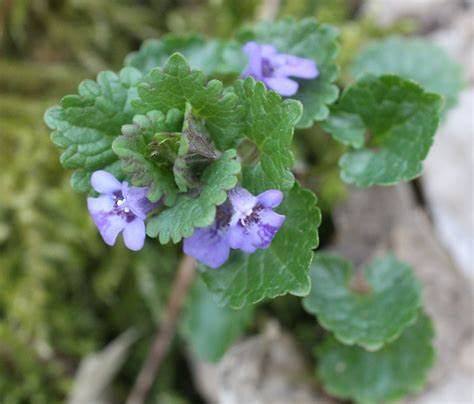
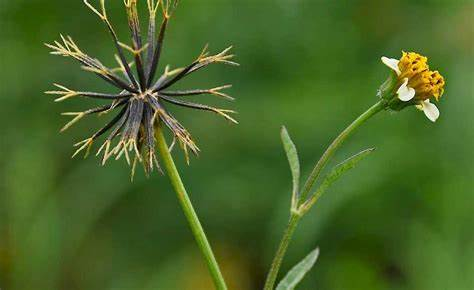
Some Doggerel for National Weed Day
Monday, January 30, 2023
Health Food Tip #1: It's Not All or Nothing
...Most of my entire life I have eaten healthy by choice, grown a good portion of my own food...hardly used any pesticides in our gardens...hardly ever ate any processed stuff and very rarely ever went out to eat. Took vitamins and other supplement and we pretty much never ever got sick. But all of that is a lot of work outside of having a regular job and a fairly normal life. So when people say things like she did above... You must drink plenty of fresh, clean water. Your diet should consist of organic whole foods, 100 percent grass-fed meat, free-range poultry, wild-caught fish, plenty of green leafy vegetables, nuts, healthy fats such as coconut oil, organic olive oil, grass-fed lard and butter, limited grains, minimal fruit sugars, and a complete avoidance of GMO, pre-processed, or highly refined foods, especially those high in added sugars. I want to know just WHERE she thinks someone who lives out in the boondocks is supposed to FIND all these wonderful things she insists upon. We were not ones to go 'on-line' and order everything either...All the produce from Mexico is pretty much awful, and now of course no matter how bad the quality of anything is, the prices are outrageous.
Wednesday, October 5, 2016
Heirloom Seeds in California
"
Join the urgent movement to Save Important Rare Heirloom seeds: Enter this code [FOODDEMOCRACY], which can be entered at checkout, when you purchase heirloom seeds at Baker Creed Seeds at rareseeds.com.
Dear Priscilla,
Every year at Food Democracy Now! we look forward to attending Baker Creek's Heirloom Seed Festival in Santa Rosa, California. Also known as the world’s largest Pure Food Festival, it's our favorite conference of the whole year, with an amazing gathering of some of the most dedicated family farmers, seed savers and grassroots activists on the planet and the most incredible display of heirloom seeds.
Unfortunately, this year, an unexpected visitor from the biotech industry showed up with a camera and a hidden video recorder in his pocket. When confronted by activists who he had harassed online for years, this biotech bully admitted that he was there to find out more about the genetics behind all the incredible diversity of heirloom seeds at the festival!
Incredibly, over the years this biotech bully and his colleagues have launched major attacks on GMO labeling activists like us at Food Democracy Now!, scientists like Don Huber and Eric Seralini and even nasty attacks on Vandana Shiva and Food Babe author Vani Hari.
Now, they coming to the Heirloom Seeds Festival to try to pick up desirable traits that they could then use to genetically engineer new GMO crops from and sell these newly patented seeds to companies like Monsanto, Bayer, Dow Chemical and DuPont.
But we need your help to make sure that we can save the incredibly biodiversity of natural traits that have been found in nature and bred traditionally for thousands of years by local farmers and home gardeners.
This is why Food Democracy Now! is partnering with Baker Creek Seed Company to make sure you have access to these seeds and can help spread and protect their amazing diversity in your own home garden.
Please SHARE this Important message far and wide with friends and family today!

Baker Creek Seed Expo Unfairly Targeted, Harassed and Fined
If having an attack dog for Monsanto show up with undercover recording equipment wasn't bad enough, this year for the first time in the Heirloom Seed Festival's history, a local Sonoma county health inspector showed and started harassing vendors for things allowing visitors to taste test organic apples before they bought them.
According to a report in the local paper:
It doesn't matter if you have a full acre plot dedicated to growing your own fruits and vegetables during the summer or if you just want to put a few seeds in a pot on your windowsill.
It's important now, more than ever to make sure the incredibly biodiversity created by previous generations of farmers and home gardeners is passed down to the next generation of seeds savers.
- Join us today in protecting heirloom seeds for future generations. We need your help to make sure that all of nature's creations don't because the private property of corporations who have no interest in our health or the environment.
- Take this opportunity to purchase rare, heirloom seeds — rare heirloom vegetables for your home garden, or pick up flower seeds and bulbs and herb seeds for your backyard or the front porch. Or just collect a bunch of their heirloom seed packets for fun!
- Use this code [FOODDEMOCRACY], which can be entered at checkout, when you buy seeds today to receive a discount and a portion of your purchases will be donated to support our work at Food Democracy Now!.
Remember, democracy is like a muscle, either you use it or you lose it!
Thanks for participating in food democracy,
Dave, Lisa and the Food Democracy Now! team
Source:
1. “Uproar over Sonoma County’s handling of National Heirloom Exposition”, Sonoma Press Democrat, September 9, 2016 http://action.fooddemocracynow.org/go/2035?t=11&akid=1933.359821.NFzewF
"
Monday, April 20, 2015
Book Review: Earth Magic
Title: Earth Magic
Author: Corinne Martin
Date: 1991
Publisher: Countryman Press
Length: 222 pages plus bibliography, glossary, and index
Quote: “This is...a sharing of one person’s experience in gathering and using herbs. The reader should avoid drawing generalized conclusions as to what will work successfully for any one individual.”
Do herbs work? In the sense that most medicinal herbs contain medicinal substances, there’s no question that they do. Will herbs work for you? Hard to say. It’s hard to predict how even controlled doses of medicinal substances will work in any given case. Prediction is even harder when it’s uncertain how much of the medicinal substance is in its natural form; we understand carotene well enough to say that you’ll get a good dose of it by eating a carrot, but there are larger and smaller carrots, drier and juicier carrots, carrots grown in different soils and under different weather conditions, and these different carrots contain different amounts of carotene and of other nutrients.Additionally your body might metabolize carotene differently than other bodies do, so you might need more or less carotene to get the same benefit from eating carrots. If you really study the properties of foods and herbs, rather than memorizing rules, it will start to seem that “the more we know, the less we know.”
Herbs work best as part of a natural lifestyle that’s aimed at preventing rather than curing diseases. The real “power herbs” are the ones, like carrots, that contain the substances the body needs to protect and repair itself. Some people would rather take some rare, probably foul-tasting, possibly toxic herb than use the cheaper, safer, more pleasant herbs found in their gardens, or even in the produce aisle at the grocery store...I don’t recommend this, myself.
The 52 herbs discussed in detail, in this book, are fairly common throughout North America. They are generally safe when used as discussed in this book, but their effects will vary. What Corinne Martin learned about the herbs she gathered and used in New England is only sometimes, not always, what she would have learned about the same herbs if she’d stayed in the Deep South; their seasons obviously vary and so do their benefits.You can use this book regardless of where you live, but as the author says, you must not be too dependent on it for advice on where and when to find herbs or what they’re most useful for. Even if you live in northern New England, you may find that your reactions to herbs differ from Martin’s, or that your symptoms came from a different cause, or even that there’s a difference between herbs picked in a wet year and herbs picked in a dry year.
The format of this book is distinctive. I find it distracting. The main text, which gives scientific descriptions of herbs and their uses, occupies a wide column and the author’s personal journal appears in a narrow column on the side. This does allow you to read either the journal or the reference work and ignore the other; if you’re reading through the book you might wish they’d appeared one after the other, so that the effect is less like the author’s two voices constantly interrupting each other.
Sections of text are also broken up with lined, blank pages for you to add your own recipes and results, in part so you can compare and contrast findings. E.g., “Willow: I have willow trees but have never used them. Most of us would have very little pain if we’d listen to the pains we do have. Common causes of headaches are dehydration, constipation, blood mineral imbalances, tension, or mild carbon monoxide poisoning—it’s almost easier to recognize what caused a headache, and cure it accordingly, than it is to pop an aspirin, much less brew willow tea for headaches. When pain can’t be immediately fixed, celery is easier to prepare than willow (just eat a celery stick) and about as effective. All the same I’m glad to have this information about willow just in case there’s a celery shortage some day.”
No, I don’t take anything for these outbursts of cranky criticism. I indulged this one because I think too many people try to use herbal remedies in an inefficient, ecologically unsound way, and are debarking too many willow trees. If you have to live with rheumatoid arthritis or some such horror, willow is for you. If you have headaches because you don’t drink enough water, please leave the willow for those who need it.
On the other hand, some real “power herbs” are undervalued because they’re common...treated like weeds, in fact. Plantain (not plátanos but the little lawn weeds) is wonderfully soothing and healing to any kind of cut, bruise, burn, insect bite, sting, scrape, blister, or other simple skin wound. Clover is hard for humans to digest raw, but contains vitamins and minerals that can be leached out and taken in medicinal tea. Dandelion tea is a natural diuretic contining potassium, useful for hypertension, diabetes, and premenstrual bloating. Dock roots can be dug in the autumn and used in medicinal tea, as Martin describes, or left to sprout in spring, when the young leaves are only somewhat sour and can be cooked like spinach, or left to grow in summer, when the ripe leaves become tough and bitter to eat but are still soothing and healing when rubbed on skin wounds. This book can encourage gardeners to find uses for several wild plants and weeds.
The “other” parts of plants gardeners prize for their fruit and/or flowers can also have medicinal value; this book discusses the herbal benefits of garden plants like violet blossoms, berry leaves, cherry bark, rose hips (seeds), and pine needles.
Tuesday, November 18, 2014
Book Review: Under the Tuscan Sun
Title: Under the Tuscan Sun
Author: Frances Mayes
Date: 1996
Publisher: Broadway / Bantam Doubleday Dell
Length: 280 pages
Quote: “My reader, I hope, is like a friend who comes to visit, learns to mound flour on the thick marble counter and work in the egg.”
Frances Mayes bought a house in Italy. More people wanted to visit her than she could entertain, so she wrote a book about the house. This book has been a bestseller, even though it’s family-friendly with only occasional flashes of dry humor. It’s not likely to make any college reading lists, but it’s a very enjoyable read, a sensory tour of a big country house written skillfully enough to give readers a wholesome mental escape from their boring commute or dismal hospital stays. It’s an almost perfect pillow book. Sort of ironic, in view of recent news stories from Tuscany, but a pleasant read.
Its one flaw as a pillow book might be the continual references to Real Italian Food, or specifically Tuscan food, the delicacies that grow in Tuscany and wouldn’t be the same in other parts of Italy. The secret is all those fresh vegetables. Our protagonists live in the country and have masses of vegetables to use up. “We no longer measure, but just cook...ingredients of the moment are the best guides” to creating their own new, authentic Italian dishes. Simmer chicken and vegetable scraps, skim the broth, add tomatoes and herbs as available, and sup. Cook pasta until it’s soft enough, add greens, cream, cooked meat, and grated cheese, toss them together and eat. Shell peas, mince shallots, soften them in butter, add a little mint, salt and pepper, chop this into a paste, and spread it on toast. Absolutely nothing to it...if you have garden-fresh vegetables. If you have to buy vegetables in a supermarket the recipes won’t turn out half as good. And if you don’t need to think about food when you’re not cooking or eating, Under the Tuscan Sun qualifies as “food porn.”
But of course Italians do other things as well as eat. Our protagonists settle in, and see the sights in the nearby towns. They go to night concerts in the town square, visit a museum and describe the elaborate fourth-century candelabrum, go to what’s ordinarily the movie theatre and watch the ballet. Nothing more “exciting” or like the plot of a novel happens to them than the renovation of the house, but it’s all fresh and new to Americans and it all feels good.
This book was a bestseller because everyone enjoys reading it once. So, Under the Tuscan Sun is recommended to anyone who hasn’t read it. It's tasteful, it's tasty, it's a Fair Trade Book, and if you buy it here for $5 + $5 shipping we'll send Mayes or a charity of her choice $1. And you can add a few other things to the package for that $5 shipping cost, too.
Thursday, July 25, 2013
Virginia SB 354 Update
http://lis.virginia.gov/cgi-bin/legp604.exe?121+ful+CHAP0473
Free money for beekeepers? Well, money, anyway. Strings may be attached; the number and position of "strings" may vary.
One good string that needs to be attached is that, before people go into beekeeping, they understand why honeybee populations have gone into decline. The more peaceable bees are, the more vulnerable they tend to be to a fungus infection that's wiped out whole beekeeping operations during the past twenty years or so. If anybody out there is thinking, "Well, my great-uncle left some old hives moldering away on the hillside. I'll just stock'em with bees and collect the money," you need to get educated before you apply for this grant money. You will need new hives; you may need a new plan for assuring any bees you adopt a dry, healthy place to live. Hives in which bees died of foulbrood need to be burned. Land on which bees died of foulbrood should in most cases be disqualified for grants.
Another thing: I didn't have to look up foulbrood. I learned about it from a beekeeper who had to burn his hives in 1994. Although beekeeping was his only job for many years, he no longer handles bees. He became disabled by a mysterious blood disease that's not believed to be either contagious or hereditary or cancer-related. Doctors suspected that prolonged and frequent exposure to bee venom might have caused the disease.
Another thing: "Africanized" bees aren't as genteel in their habits as the peace-loving, lower-immunity "Italian" breed. Although the Bible notes the phenomenon of bees nesting in a carcass as a "News of the Weird" item thirty gamblers and riddle-lovers failed to imagine, I have seen "Africanized" bees ignoring clover blossoms to buzz around carrion or cat litter. (Yes, these were bees, not flies that try to look like bees; they had nests containing honeycombs.) I would not expect the kind of health benefits sometimes reported for various kinds of flower honey to be available from honey produced by garbage-eating bees. "Italian" bees are said to be so particular about their honey that the alert beekeeper can pick out separate combs of honey derived from different kinds of flower; I don't know whether this is true for the "Africanized" breeds.
So...beware: the challenges of beekeeping go beyond buying hive material and avoiding stings. Nevertheless, many people do find beekeeping pleasant and profitable.
Saturday, April 13, 2013
Can Monarch Caterpillars Eat Dill or Parsley?
The short answer is no. Caterpillars sometimes explore plants they can't eat, or eat things that aren't part of their natural diet and don't give them proper nutrition. You might see a monarch butterfly caterpillar on a plant other than milkweed, but that's not normal and the caterpillar wouldn't eat very much of that plant. (Monarch caterpillars often choose plants they can't eat, where the creatures that eat them are less likely to look for them, to pupate and turn into butterflies.)
However, baby swallowtail butterflies, sometimes known as parsley caterpillars, devour parsley, dill, and related garden plants.
Confusion is possible because, although the caterpillars look very different, they might be described in similar terms. Both are good-sized caterpillars, eventually growing two inches long (some swallowtail larvae are bigger). Both have black, white, and yellow stripes; monarch caterpillars' stripes are narrower. Both, during the last stage before they pupate, have "horns"; monarch caterpillars' appendages are long, flexible black "whips," and swallowtail caterpillars' "horns" are a fleshy erectile organ called an osmeterium that resembles a snake's tongue and emits an odor many birds dislike.
Monarch caterpillars are slim, with straight, smooth bodies. Swallowtail caterpillars vary--there are different species that can eat dill and parsley--but most have a humpbacked shape and a stubbier build than monarch caterpillars.
Here's a primary-school-friendly web site with more information about monarch butterflies:
http://www.learner.org/jnorth/tm/monarch/ExpertAnswer11.html
Here's a page with nice clear pictures of mature monarch caterpillars, showing their "horns":
http://www.ecosystemgardening.com/do-monarch-caterpillars-eat-anything-besides-milkweed.html
Here's a chart showing what lots of different butterfly caterpillars eat:
http://www.joyfulbutterfly.com/articles/whatdocaterpillarseat.html
Here's a page with (gross-out alert--highly magnified caterpillar images) clear, colorful photos of many caterpillars. You'll have to scroll a long way down for the monarchs, even further down--almost to the bottom--for the swallowtails:
http://richard-seaman.com/Arthropods/Usa/Caterpillars/NorthernIllinois/
Here's a stressed-out Black Swallowtail caterpillar, waving its "horns":
http://bugguide.net/node/view/28634
Here's an article about swallowtail butterflies, including nice clear photos of eggs and newly hatched swallowtail caterpillars, so you can (if you wish) pick them off your herbs before they really start devouring:
http://themagnifyingglass.typepad.com/weblog/2009/05/how-to-raise-swallowtail-caterpillars.html
While the monarch butterfly is unique, the swallowtails are a large family, with some member species that don't eat garden plants at all. Tiger Swallowtails mostly eat the larger and tenderer leaves found at the tops of tulip poplar trees, which is why you seldom see the caterpillars. Zebra Swallowtails eat only pawpaw trees. And so on.
Thursday, March 14, 2013
Please Help! Monsanto Manipulates Mikulski
This week, Senator Mikulski (D-MD) has introduced an outrageous rider giving a blank check to Monsanto and other corporations to plant illegal genetically engineered crops and it could be voted on tomorrow!
This dangerous rider was not included in the House-passed CR, and we are extremely disappointed to see that Senator Mikulski has included it in the Senate version.
Thanks to our pressure Senator Tester has introduced an amendment (#74), co-sponsored by Senators Boxer, Gillibrand, and Leahy, to strike the rider from the Continuing Resolution!
Click here to help stop the Monsanto Protection Act in its tracks!
Late Monday night, biotech lobbyists succeeded in slipping the dangerous biotech rider (Sec. 735) into the Senate Continuing Resolution spending bill in an effort to strip federal courts of their authority to halt the sale and planting of any illegal, potentially hazardous GMO crop.
If approved, the Monsanto Protection Act would force the USDA to allow continued planting of any GMO crop under court review, essentially giving backdoor approval for any new genetically engineered crops that could be potentially harmful to human health or the environment.
Clearly Monsanto and the biotech industry are getting desperate and want to try an end run around a growing movement of farmers and citizens who are rejecting their products and calling for GMO labeling in an effort to make sure their new GMO crops can evade any serious scientific or regulatory review."
Yes, please click that link, Gentle Readers. I added to the form letter FDN provides that organic (True Green) farms need protection from genetically modified organisms; you're encouraged to share your thoughts along this line.
Saturday, February 9, 2013
Beware Richmond's Bearing Conservation Easements
"Beware Richmond’s Bearing Conservation Easements for Farmers
By Donna Holt, Virginia Campaign for Liberty
Matt Lohr, Commissioner, Virginia Dept. of Agriculture and Consumer Services, touts conservation easements as a means of “protecting the family farm” in his recent Cooperative Living editorial.
The original intent of conservation easement was to provide the means for the struggling farmer to save the family farm and preserve agricultural and forestry industries.
It wasn’t long before wealthy estate owners took advantage of the generous conservation program with a state giveaway of vast sums – some measuring into millions of dollars – to induce millionaires to “conserve” luxurious estates that they had no intention of developing anyway?
Virginia, which forces the humblest homeowners to place their real estate transactions in public view, created a special law allowing the millionaires to shroud such deals currently measured at $106.8 million a year in taxpayer money. Conservation in Virginia makes that possible.
Virginia boasts that its land preservation incentives are the “most generous” in the country. Indeed, the state budgets over $100 million a year to pay people not to develop their land.
While the amount that any individual landowner receives is kept secret from the public, a 2010 investigation by Hook, a Charlottesville weekly newspaper, revealed a veritable who’s who from the Charlottesville business, entertainment, government, and environmental worlds taking advantage.
Such entertainment magnates as Dave Matthews, John Grisham, and Coran Capshaw join business titans Hunter Craig, Wick McNeely, and Jim Murray. Local leaders Ann Mallek from the Albemarle Supervisors and waterworks chair Michael Gaffney use the program. So do big names from the environmental world such as Nature Conservancy board member Michael Bills, Southern Environmental Law Center director Rick Middleton, and avid eco-donor Tony Vanderwarker.
All these people have partnered with green groups to receive compensation for keeping some land unspoiled. What could possibly be wrong about that?
“It’s socialized capitalism for the rich,” says former Albemarle teacher Mark Crockett. “People who buy big estates don’t plan to develop them. Why turn and give them a tax credit?”
It’s also an appraisal racket. Biscuit Run serves as a prime example of the corrupt use of the conservation easement program.
The value of land is in its use. When the ability to engage in commerce and profit from the use of land is restricted and often denied, the value of the land is reduced. In contrast, an estate owned by wealthy elites maintains a much higher value per acre. The appraised value of the land determines the initial payout and tax benefits of the easement. The result is the benefit to the wealthy estate owner far outweighs the benefit to the struggling farmer.
The farmer is most often forced to place his land into a conservation easement to save it in response to the very strict land use regulations and expensive permits for every conceivable use of land. The noose is further tightened by limiting commerce, by permit only, to only raw produce. Permits aren’t granted for the sale of byproducts produced from the things farmers grow. Unless, of course, you happen to be the wife of a member of the Board of Supervisors in your locality as is the case in Fauquier County.
Fauquier County has some of the strictest land use restrictions of any locality in Virginia. Consequently, they boast a total of approximately 96,600 acres are in conservation easements, or 23 percent of the total land in the county, according to The Piedmont Environmental Council.
As numerous land trusts, set up by non-profits, have grown in size and number, so have their association and influence with government. This is particularly the case with large, national organizations like Piedmont Environmental Council and The Nature Conservancy that obtain enormous sums from federal funding.
Many land trusts have operated more like government agents. They often help to write the strict land use regulations adopted by local governments. They stand in waiting to acquire easements from struggling farmers, only to turn around and quietly sell them – sometimes for a profit – to state or federal governments.
It’s not surprising that Matt Lohr, the Virginia Commissioner of Agriculture, would consider joining the ranks of the rich to fleece the taxpayer while he supports restricting the sale of agricultural products by a struggling farmer.
From Fauquier Free Citizen: http://fauquierfreecitizen.com/beware-richmonds-bearing-conservation-easements-for-farmers/
Remember, Governor McDonnell announced Virginia Land Conservation Grants of $1.55 million dollars to add 1,642 acres of conserved lands through the Virginia Land Conservation Fund (VLCF) administering agency of The Virginia Department of Conservation and Recreation. Most of this private land was acquired through conservation easements.
Please read the analysis below on conservation easements from The National Center for Public Policy Research, then forward this important information to others, especially landowners. An educational effort on reasons to say no to conservation easements can slow the central government control of our agriculture and natural resources and help "conserve" private property.
Through manipulations to the tax code, government influences property owners' decisions on land use, promising immediate tax relief to those who forfeit full rights and ownership of property. But given inherent problems with conservation easements, most pointed, the rise in government involvement, influence, and acquisition of lands under easement, a far more effective means would be to eliminate the estate taxes that discourage land preservation in the first place. ( See more Recommendations in the report )
This report from The National Center for Public Policy Research examines 1) conservation easements' questionable arrangement that shifts private lands to government control; 2) the costly and potentially detrimental impact of perpetual deeds; and 3) the manipulative use of the tax code.
Conservation Easements: The Good, the Bad, and the Ugly
Read more: http://www.nationalcenter.org/NPA569.htmlThe National Center for Public Policy Research
--
"Educate and inform the whole mass of the people. They are the only sure reliance for the preservation of our liberty." - Thomas Jefferson Virginia Tea Party Patriots www.virginiateapartypatriots.com Danville Patriots http://danvillepatriots.com/ "
Thursday, February 7, 2013
SB 1309: Soil and Water Conservation Board
http://lis.virginia.gov/cgi-bin/legp604.exe?131+ful+SB1309S1
Is this Agenda 21? Are death panels only one step behind? Who knows. Is this even a scheme to adapt "cap and trade" to farming, so that big industrial-type "farms" can continue to pollute as long as Grandma is not allowed to keep a few hens and sell the eggs? Who knows. This is a substantial expenditure of money that meets no urgent need, offers no great advantage, and anticipates a degree of economic stabilization or growth that seems unlikely to materialize in the near future. Even if the sole effect of SB 1309 were to create a few jobs, I'm not sure why our legislature was so quick to agree that we can afford to create those jobs.
Wednesday, January 9, 2013
Monsanto Lawsuit Update
"On January 10, family farmers will enter a courtroom in Washington DC to take part in the appeal of OSGATA vs Monsanto et al, a court case filed to protect farmers from genetic trespass by Monsanto’s GMO seed, which contaminates organic and non-GMO farmer’s crops and opens them up to abusive lawsuits. In the past two decades, Monsanto’s seed monopoly has grown so powerful that they control the genetics of nearly 90% of five major commodity crops including corn, soybeans, cotton, canola and sugar beets.
In many cases farmers are forced to stop growing certain organic and conventional crops to avoid genetic contamination and potential lawsuits. Between 1997 and 2010, Monsanto admits to filing 144 lawsuits against America’s family farmers, while settling another 700 out of court for undisclosed amounts. Due to these aggressive lawsuits, Monsanto has created an atmosphere of fear in rural America and driven dozens of farmers into bankruptcy.
Farmers need your voice today. Please spread the word.
http://action.fooddemocracynow.org/sign/farmers_vs_monsanto/?referring_akid=717.359821.JFJptD&source=taf "